Aadya – Thoraipakkam
How Customers Evaluate Land Value Before Investing
Land is the primary infrastructure of wealth. Unlike depreciating assets like buildings or vehicles, a well-chosen plot is a permanent entry on a balance sheet that grows in utility as urban density increases. However, the market for Plots for Sale in Chennai has shifted from emotional purchases to data-driven acquisitions. Investors are no longer looking for a patch of green; they are looking for a high-velocity asset that can withstand market corrections and regulatory changes.
The complexity of the Chennai market requires a clinical approach to acquisition. Whether you are looking at Land in Poonamallee or exploring the suburban fringes, the valuation is not determined by the seller’s asking price. It is determined by the intersection of connectivity, topography, and legal transparency. A failed assessment at the entry point leads to trapped capital. Success requires a protocol that treats land as a technical engineering project rather than a lifestyle choice. A smart land investment is built on the reality of the ground, not the promise of a brochure.
The Science of Physical Land Assessment
The physical attributes of a plot are the first constraints on its future value. Professional investors begin with the “hardware” of the site. Topography is not just about looks; it is about drainage and construction costs. A plot that sits below the road level requires significant landfill and elevated foundation costs, which directly erodes your future profit margins.
Soil quality and the depth of the water table dictate the final build cost. In Chennai, seasonal rainfall is an aggressive variable. Plots that cannot manage runoff or sit in low-lying stagnation zones lose value the moment the monsoon hits. Natural elevation is a premium asset because it bypasses the need for expensive municipal drainage reliance or massive landfill. Shape is a matter of FSI efficiency. Square or rectangular layouts allow for maximum floor space. Irregular boundaries force architectural compromises and leave wasted corners that cannot be monetized. If the land shape is awkward, your resale value is capped before you even break ground. You have to price these physical constraints into your entry point or accept the margin erosion later.
Infrastructure as a Value Driver
Connectivity is the circulatory system of real estate. A plot without easy access to a major arterial road is a dead asset. Investors today perform a rigorous land value assessment by measuring the time-distance to the nearest economic hub. It is no longer about the number of kilometers; it is about the quality of the transit infrastructure.
The proximity to upcoming infrastructure projects, such as the Chennai Metro expansion or the Peripheral Ring Road, provides the most significant “velocity” to land prices. Land that is currently undervalued but sits in the direct path of an upcoming highway or transport interchange is the primary target for institutional-grade investors. This is where a land valuation shifts from a current market price to a future projected value.
Municipal amenities are the second layer of infrastructure. The availability of a stable EB (Electricity Board) connection, proximity to substations, and the presence of piped water lines are mandatory requirements. If a plot requires an investor to rely solely on private tankers or expensive high-tension line extensions, the valuation must be discounted to account for these operational inefficiencies.
Legal Due Diligence: The Foundation of Land Value
In the Indian real estate context, legal integrity is the most volatile variable. You can fix a drainage issue, but you cannot fix a defective title. A sophisticated land value assessment begins with a 30-year Encumbrance Certificate (EC). This is the “blueprint” of the land’s history.
Key legal checkpoints include:
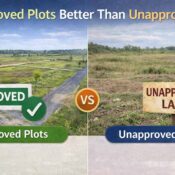
- DTCP or CMDA Approval: Without these, a plot is just agricultural land with zero residential utility. Unapproved layouts are liabilities. You risk demolition or regularization fees that often surpass the land’s market value.
- Patta and Chitta Records: Ownership verification in revenue records is non-negotiable. If the name on the sale deed does not match the Patta, the title is a legal trap.
- RERA Compliance: This is the only institutional protection for plotted projects. It binds the developer to an infrastructure timeline. Without it, you are relying on verbal promises that rarely materialize.
A high land valuation is only valid if the title is litigation-free. Many investors make the mistake of ignoring “minor” family disputes or pending legal cases in the hope of a quick profit. This is how capital gets trapped for decades. A clean title is the only guarantee of liquidity.
Understanding Local Appreciation Cycles
Chennai’s growth is moving in specific corridors. The OMR (Old Mahabalipuram Road) belt focuses on IT, while the West Chennai belt is driven by manufacturing and industrial logistics. Understanding which “engine” is driving a specific area is vital for a successful land investment.
For example, growth in the western suburbs is fueled by the proximity to the Sriperumbudur-Oragadam industrial belt. This creates a permanent demand for housing from a massive workforce. When you evaluate land in these corridors, you are betting on the continued industrial output of the region. This is a more stable bet than speculating on “lifestyle” developments that may or may not attract residents. Appreciation is a byproduct of economic utility. If there are no jobs within a 15-minute radius, the land will not appreciate at a rate that beats inflation.
Future Utility and Rezoning Potential
The most profitable land acquisitions are those where the “Current Use” is different from the “Highest and Best Use.” A plot that is currently categorized as residential but sits on a burgeoning commercial road has massive upside through rezoning.
Investors who perform a deep land value assessment look at the Master Plan of the city. They look for areas where agricultural land is being converted to residential or commercial use. This “rezoning delta” is where the most significant wealth is created. However, this requires a technical understanding of the local building bypass rules and the ability to navigate municipal zoning boards. If you buy land without knowing the future zoning of the adjacent plots, you might find a factory being built next to your residential villa five years from now.
Why Expert Guidance Outperforms Market Speculation
Real estate in Chennai is a relationship-based market. Often, the best plots never hit the open portals. They are transacted through professional networks that prioritize speed and legal certainty. Relying on “street talk” or unverified market tips is a recipe for failure.
Professional developers and consultants bring a clinical eye to a land valuation. They see the bottlenecks that a retail investor misses, such as hidden water channels, upcoming high-tension wires, or pending land acquisition notices from the government. Engaging with a developer who has a track record of litigation-free delivery is the only way to ensure your capital is safe.
A final land value assessment should be a “Stress Test.” Ask yourself: If I had to sell this plot tomorrow, who is the buyer? If the only answer is “another speculator,” you are in a bubble. If the answer is “a family looking to build a home” or “a business looking for a warehouse,” then you have an asset with real-world utility.
Conclusion
Investing in land is about managing the infrastructure of your future. It is a decision that requires a blend of legal scrutiny, geological assessment, and an understanding of urban transit patterns. In a rapidly expanding city like Chennai, the opportunities are massive, but the risks of “dead land” are equally high. By focusing on the western corridors and securing Valarpuram Plots or similar high-growth assets, you are positioning yourself in the direct path of the city’s inevitable expansion. Stop looking for the cheapest price per square foot. Start looking for the highest utility per square foot. That is the only way to ensure your capital remains a productive engine of wealth rather than a static piece of dirt.

Recent Posts

How Customers Evaluate Land Value Before Investing
Are Approved Plots Better Than Unapproved Land?